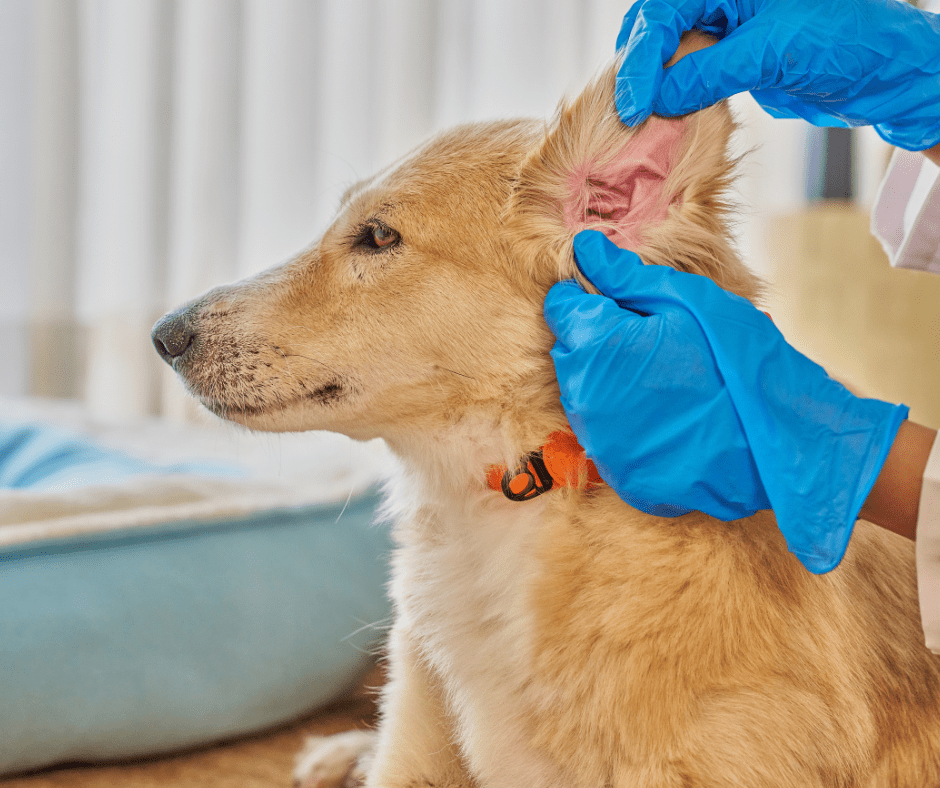
If you notice your dog scratching their ear, they’re normally giving you a sign. Either they have an itchy ear (that’s okay sometimes!) or there is something more going on. Sometimes, there may be a little irritation, a brewing infection or a potential foreign body.
Let’s undercover the signs and symptoms of ear infections in dogs, along with how our Pawsome team can help them recover as quickly as possible.
Read also: Travelling With Your Dog: 12 Essential Tips
Ear Infections in Dogs: The Symptoms
There can be a variety of different symptoms for ear infections in dogs. It all depends on the type of infection that is present, what stage the infection is at and whether the dog has had this type of infection before.
Common symptoms of ear infections in dogs include:
- A smell coming from the ear, sometimes yeasty
- Discharge
- Constant scratching
- Redness on the pinna (ear flap) or entrance to the ear canal
- A head tilt
- Loss of coordination
- Head shaking
- Nystagmus (flickering eye movements)
- Rubbing ears across the floor or furniture
However, not all ear infections have the same types of symptoms or look the same. That’s why it can be really tricky for owners to understand when there is an infection present, making it super important for one of our vets to take a look.
If you notice any of the symptoms above, we recommend booking an appointment as soon as possible by giving us a call on 01623 203529.
Types of Ear Infections in Dogs
There are many different types of ear infections in dogs that can affect different parts of the ear. Some infections may only affect the outer ear which you can physically see, whereas other infections can be found deeper within the ear canal which vets can observe with special equipment.
Some common types of ear infections in dogs include:
- Otitis Externa: Affecting the external ear canal, signs can include shaking, scratching, redness and discharge.[Text Wrapping Break]
- Otitis Media: Infection of the middle ear, behind the eardrum. Symptoms can include persistent otitis externa, a head tilt and pain when opening the mouth.[Text Wrapping Break]
- Otitis Interna: Infection of the inner ear which usually occurs from the infection found in Otitis Media. Symptoms can include loss of balance, a head tilt and nystagmus.
Ear infections can be caused by different types of bacteria and other stimuli.
- Bacterial Otitis: Often causing pain, inflammation and discharge.
- Yeast Otitis: Usually has a sweet or musty smell with brown, waxy discharge.
- Parasitic Otitis: Caused by parasites such as ear mites, this causes intense itching and dark ear debris.
- Allergy Ear Disease: Problems within the ear can occur due to environmental or food allergies causing inflammation and irritation.
- Foreign Body: Usually caused by grass seeds that become lodged in a dog’s ear, a foreign body can cause irritation, inflammation and pain. They can then develop a secondary bacterial infection or yeast infection if the foreign body is not removed.
Why Do Ear Infections Happen in Dogs?
There may be certain activities that can put your dog at an increased risk of contracting an ear infection. However, they can occur for a variety of different reasons.
- Swimming: After swimming, moisture can get trapped within the ear canal, creating an environment for bacteria and yeast to thrive.
- Ear shape: Dogs that have long, floppy ears (we’re looking at you Spaniels!) may have reduced air flow within the ear, causing recurring infections.
- Allergies: Some foods, along with environmental allergies such as dust mites, pollen and mould are some of the most common underlying causes of ear infections.
- Excessive wax production: Dogs naturally produce wax, but some may overproduce more ear wax than others, providing a perfect environment for microorganisms to breed.
How Are Ear Infections Treated in Dogs?
We know that seeing your precious pooch in pain, stress and discomfort can be really upsetting for both you and your dog. So, we aim to get you both feeling pretty Pawsome as soon as possible.
Treatment of ear infections in dogs all depends on the cause and severity of the infection. Some of the treatments that we commonly perform include:
Cleaning The Ear
The first step for most ear infections is for us to clean the ears thoroughly with a prescription ear cleaner. This helps to remove the wax, debris and discharge so that we can visualise the ear canal, as well as allowing ear drops to work effectively.
In some cases, your dog may need a sedation for the ear to be flushed thoroughly.
Topical Ear Medication
Many ear infections can be treated with ear drops. These often contain a mix of steroids, antifungals and antibiotics. We will be able to demonstrate to you how to apply the ear drops for you to continue at home, or we can use a long-lasting solution.
Systemic Medication
In some cases, we may opt to use tablets or injectable medications. This is often when the infection is severe, the ear canal is too narrow or painful, or when other medications are no longer working.
Addressing Underlying Causes
Ear infections can just happen out of the blue, but they may keep recurring for a particular reason. We may need to test your dog for allergies, cover them with parasitic treatment or remove a foreign body.
Pawsome Vets will be here to support you every step of the way, no matter what treatment is required.
Final Thoughts
Ear infections in dogs can be stressful for both you and your dog. The good news is that most cases are treated quickly and easily.
Whether infections are caused by bacteria, allergies, yeast or a foreign body, our highly skilled team of veterinary surgeons will help to diagnose the problem and treat it accordingly.
If you ever notice symptoms of an ear infection, don’t wait to see if it will improve on its own. Pawsome Vets are here to keep your dogs happy, healthy and ear infection free, so contact us as soon as possible on 01623 203529.
FAQs
Let’s cover some of the most common questions that we get asked regarding ear infections.
Are yeast infections in dogs painful?
Yes, yeast ear infections can be painful. This is due to the inflammation within the ear causing irritation. It’s best to bring your pet for an appointment as soon as possible if you think they are in pain.
Are ear infections in dogs contagious to other dogs?
Most ear infections in dogs are not contagious to others. If you own more than one dog, it is unlikely that the ear infection would be passed to the other dog, unless they have contracted ear mites. Ear mites can be easily avoided by covering your pets with parasiticide medication. Check out our pay monthly plans to help spread the cost of your flea and worming medications!
Are ear infections in dogs a pre-existing condition for insurance?
This all depends on the cause of the ear infection and your pets’ insurance coverage at the time of the infection. If your pet contracted an ear infection before they were covered on an insurance policy, this would most likely count as a pre-existing condition.
Are ear infections in dogs common?
Yes, ear infections in dogs are very common. In fact, we see dogs daily with ear infection symptoms.