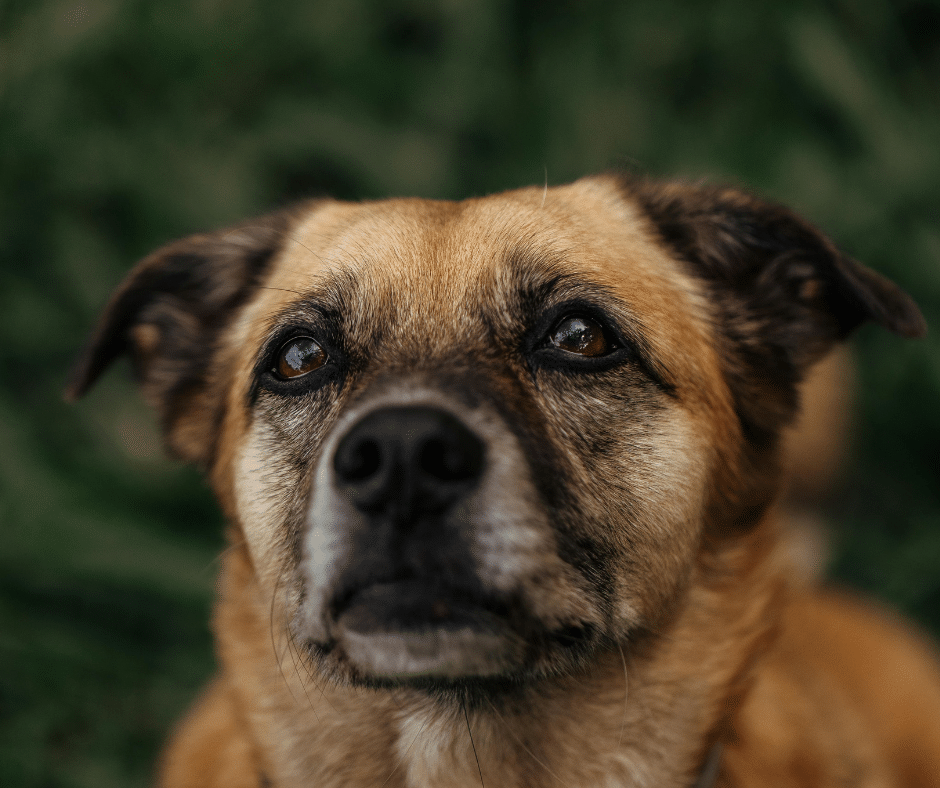
If your pet has been diagnosed with cushing’s disease, you may be wondering how and why the condition affects your pet. Also known has hyperadrenocorticism, cushing’s causes your dog’s body to produce too much of the hormone known as cortisol.
Cortisol has an important role within the body by helping to regulate both the metabolism and immune system. One of the key functions that it also regulates is the response to stress.
However, if the cortisol remains too high for a period of time, it can start to cause a range of problems.
Let’s delve deeper into cushing’s disease to help give you a better understanding of the condition.
What Causes Cushing’s Disease in Dogs?
There are three main causes of cushing’s disease found in our canine companions.
Pituitary-dependent Cushing’s Disease
This is the most common form of cushing’s disease found in dogs. It occurs when a small tumour develops in the pituitary gland, which is located at the base of the brain. This tumour causes the gland to produce too much of a hormone known as ACTH – adrenocorticotropic hormone.
The ACTH then stimulates the adrenal glands to produce high levels of cortisol, resulting in excessive amounts of cortisol within the dog’s body.
Although a brain tumour sounds super scary, many are benign (not cancerous) and remain small in size.
Adrenal-dependent Cushing’s Disease
If the cause of cushing’s disease is not found in the brain, the problem can often be located near the kidneys themselves. Similar to a tumour in the brain, the tumour can instead be located at the adrenal glands, located near the kidneys.
The adrenal glands produce different hormones, including cortisol. An adrenal tumour can produce excessive amounts of cortisol, causing cushing’s disease.
Many adrenal tumours are benign, however some can be malignant (cancerous). Further investigation is often recommended to determine the extent of the tumour.
Iatrogenic Cushing’s disease
With the other two forms of cushing’s disease being caused by a tumour, iatrogenic cushings is caused by the long term use of corticosteroid medications, such as prednisolone.
Steroids are a useful medication that can help to treat a variety of diseases, but a continued or prolonged high dose can result in signs of cushing’s disease.
What Are The Symptoms Of Cushing’s Disease In Dogs?
Signs of cushing’s disease can develop slowly and vary from mild to severe.
Common signs include:
- Increased thirst
- Increased appetite
- Increased urination
- Panting
- Pot-bellied appearance
- Hair thinning
- Thin skin
- Lethargy
- Poor wound healing
- Recurrent skin infections
- Recurrent urinary infections
The main symptoms include increased drinking, appetite and urination, particularly paired with poor skin, fur and a pot-bellied appearance. If you notice these symptoms, we recommend booking an appointment.
How Is Cushing’s Disease Diagnosed In Dogs?
If we suspect that your dog has cushing’s disease, one of our experienced veterinary surgeons will be able to discuss the diagnostic process with you.
Along with taking a detailed history and physical examination, they will often recommend a blood and urine test. These help to identify common parameters found with dogs who have cushing’s disease.
Our vets may recommend one of two tests:
Low-dose Dexamethasone Suppression Test (LDDST)
This is a common test used in the diagnostic process of cushing’s disease. Dexamethasone is a synthetic corticosteroid, and giving a small dose should lower the body’s production of the cortisol hormone.
In many dogs that are affected by cushing’s disease, the cortisol hormone is not suppressed by the dexamethasone, helping to reach a diagnosis of cushings.
ACTH Stimulation Test
By performing an ACTH stimulation test, we are able to measure cortisol levels before and after the administration of synthetic ACTH hormone.
A blood sample is taken and the synthetic hormone is administered. After a period of time, a second blood sample is taken and sent to a laboratory, where the two different levels are compared.
This can help to give us an insight into whether your dog has Cushing’s disease or not.
How Is Cushing’s Disease In Dogs Treated?
The type of treatment depends on a variety of factors, including the type of cushing’s disease identified, the individual patient and their overall health.
Medication For Dogs With Cushing’s Disease
For many dogs, our vets will often prescribe medication to help with cushing’s disease.
A drug with the active ingredient trilostane is commonly prescribed and helps by reducing the production of cortisol by the adrenal glands.
Your dog will need to be routinely monitored throughout this lifelong treatment, as too little or too much cortisol within the body can be harmful.
Regular blood tests and consultations are required to assess their response to the medication, but one of our vets will be able to discuss this with you in more detail.
Treating Iatrogenic Cushing’s Disease
If cushing’s disease has developed because of long-term steroid use, then our vets may gradually reduce their steroid dosage. This can only be advised by a veterinary surgeon, so you will need an appointment to discuss this in more detail.
Stopping steroids suddenly can cause serious problems, so we recommend that you always closely follow our veterinary surgeons recommendations.
Can Cushing’s Disease In Dogs Be Cured?
It is likely that cushing’s disease is a lifelong health problem in dogs, however, this can depend on its underlying cause.
In some cases, such as adrenal tumours, these could potentially be removed with successful surgery. However, this is not commonly performed at first-opinion practices.
With appropriate treatment and management, many dogs with cushing’s disease can continue to have a great quality of life.
Final Thoughts On Cushing’s Disease
Cushing’s disease is a manageable condition in dogs, but early diagnosis and routine monitoring are essential to your pet’s health.
If you notice any changes in your dog’s thirst, urination, appetite, body shape or skin and coat condition, we recommend booking an appointment with one of our vets as soon as possible.
Whilst these symptoms don’t necessarily mean that your dog has cushing’s disease, it is important that our team investigates the causes further.